
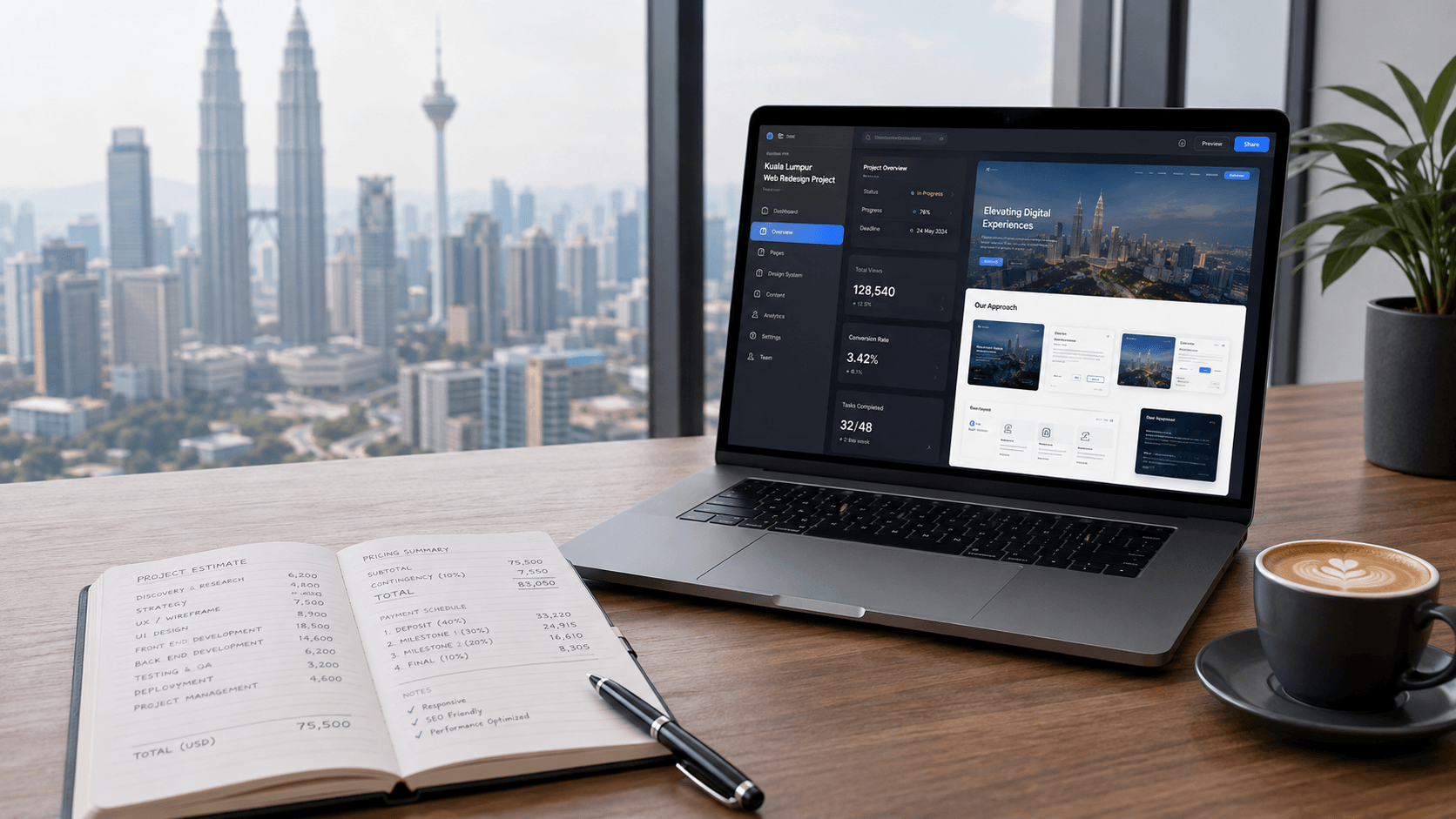
Choosing a website agency requires more than reviewing portfolios or comparing prices. The agency must understand your business, customers and technical requirements. A professional website should support measurable outcomes. These may include enquiries, bookings, purchases, registrations or job applications.
The right Web design KL agency should combine strategy, design and technical development. Its process should also fit your timeline and internal resources. This guide explains how to evaluate agencies before signing. It covers portfolios, local knowledge, technical capabilities, pricing and ongoing support.
Define What Your Business Needs
Before approaching an agency, establish what the website must achieve. Clear requirements help the agency recommend an appropriate design and technical approach.
Start by identifying the website’s primary objective. A corporate website has different requirements from an online store or appointment platform. Businesses should prepare:
- The main website goal.
- An estimated number of pages.
- Required forms and functions.
- Preferred content languages.
- Existing content requiring migration.
- Third-party integrations.
- An available budget range.
- A preferred launch date.
Separate essential requirements from optional features. This allows the agency to prioritise the first launch while planning future improvements.
Content responsibilities should also be confirmed early. Decide whether your team or the agency will provide copy, images and translations.
Review the Agency’s Portfolio Properly
A portfolio should demonstrate more than attractive layouts. It should show how the agency solves different communication, usability and technical problems.
Examine the Design Quality
Review typography, spacing, imagery and visual hierarchy. Each website should guide visitors towards important information and actions. Look for variety between projects. Websites should not appear like minor variations of one template.
The design should also reflect each client’s audience and market position. A professional services website requires a different approach from a retail brand.
Test Live Websites
Open portfolio websites instead of relying entirely on screenshots. A screenshot cannot reveal loading behaviour, responsive layouts or broken functionality. Test navigation, buttons and forms on desktop and mobile devices. Check whether content remains readable and easy to access.
Pay attention to mobile menus and interactive elements. These features may look correct while remaining difficult to use. A reliable Web design KL provider should explain the reasoning behind each project. It should discuss the original problem, proposed strategy and final solution.
Look for Relevant Experience
Industry experience can be useful, but project complexity may provide stronger evidence. Look for websites with similar functions or content requirements. For example, an education website may need programme filters and enquiry forms. A healthcare website may require appointments and location pages.
Ask who completed the design and development work. The agency should clarify whether any important services were outsourced.
Assess Its Understanding of Kuala Lumpur Customers
Local knowledge can help an agency understand customer behaviour and language preferences. However, location alone does not guarantee better work. The agency should demonstrate how it researches your audience. Avoid broad assumptions about customers based only on where they live.
Businesses may serve people across Kuala Lumpur and the wider Klang Valley. The website should support local customers without limiting broader reach. Contact details, operating areas and business hours must remain accurate. Customers should be able to call, message or submit enquiries easily.
Multilingual websites require additional planning. English, Bahasa Malaysia and Chinese content may need separate URLs and navigation. Different languages can affect text lengths and layouts. The agency should account for these differences during responsive design.
Local SEO should use genuine service and location information. Avoid repetitive pages that only replace one location name with another.
Evaluate Its Design and User Experience Process
Professional website design should begin with discovery. Visual design should not start before the agency understands the business and intended audience.
Discovery and Strategy
Expect questions about your goals, services, customers and competitors. The agency should also ask what visitors need before taking action. Discovery helps define project priorities and technical requirements. It also reduces major revisions after design begins.
The agency should document the agreed scope before moving forward. Both parties need the same understanding of the website’s purpose.
Sitemap and Content Planning
A sitemap defines the website’s main pages and their relationships. It should organise information around customer needs and business priorities. Ask how services, resources and company information will be grouped. Important pages should remain easy to reach.
The agency should identify missing content early. Waiting for copy and images can delay the entire project.
Wireframes and Visual Design
Wireframes establish content order and page structure. They help teams resolve usability problems before applying colours and imagery. After approval, the agency can create the visual design system. This may include typography, colours, buttons, forms and reusable components.
Confirm which pages will receive unique layouts. Repeated content should use consistent templates where appropriate.
Responsive Design
Responsive design involves more than shrinking desktop pages. Content may need different spacing, sizing and arrangements on smaller screens. Navigation, forms and buttons must remain usable on mobile devices. Touch targets should have enough space for accurate interaction.
Responsive planning should begin during design. It should not become a final adjustment before launch.
Examine the Agency’s Technical Capabilities
An attractive website can still fail because of weak technical development. The agency must understand your platform, CMS and integration requirements. Ask who will develop the approved design. Confirm whether development is completed internally or by external contractors.
CMS and Content Management
A content management system should allow internal teams to publish without rebuilding layouts. Its structure must reflect the website’s actual content. The CMS may manage:
- Articles and resources.
- Products and services.
- Team profiles.
- Case studies.
- Events.
- Locations.
- Testimonials.
- Job vacancies.
Field names should be understandable to non-technical editors. Complicated structures can make routine updates unnecessarily difficult.
Ask whether CMS training is included. Written or recorded documentation can support future employees.
Integrations and Custom Functions
Some websites need connections with CRM platforms, booking systems or payment gateways. Each integration introduces technical dependencies. The agency should explain what the integration does and how it will be tested. External subscription costs should also be disclosed.
Custom code may be required for specialised features. Confirm how this code will be documented and maintained after launch.
Website Performance
Performance should be considered during design and development. Large images, scripts and animations can create unnecessary loading delays. Ask how the agency optimises assets and tests performance. Important service, article and form templates should be reviewed.
Testing the homepage alone is insufficient. Deeper pages may contain different layouts and external tools.
Check What SEO Work Is Included
Many agencies describe their websites as SEO-friendly. This term is unclear unless the proposal identifies specific deliverables. Basic launch SEO may include:
- Page titles and meta descriptions.
- Logical heading structures.
- Descriptive image alt text.
- Internal links.
- Search-friendly URLs.
- Sitemap configuration.
- Indexing controls.
- Redirects from replaced pages.
Ask whether keyword research and copy optimisation are included. These services often require additional content and strategy work. Ongoing SEO is usually separate from website development. It may involve content production, technical audits and performance monitoring.
Redirect planning becomes particularly important during a redesign. Missing redirects can send visitors towards removed pages.
Review the Project and Communication Process
A structured process creates clearer expectations. It also helps both parties identify delays before they affect the launch. A typical website project may include:
- Discovery and requirements gathering.
- Sitemap and content planning.
- Wireframing.
- Visual design.
- Website development.
- Content migration.
- Testing and quality assurance.
- Launch and handover.
- Post-launch support.
Confirm who will be your main contact. This person should coordinate feedback, updates and internal production work. Ask how often progress updates will be provided. The agency should also explain which milestones require client approval.
Revision limits must appear within the proposal. Ask what counts as one revision round and how additional changes are charged. Changes after design approval may require redevelopment. The agency should explain their effect before completing extra work.
Compare Quotations Based on Scope
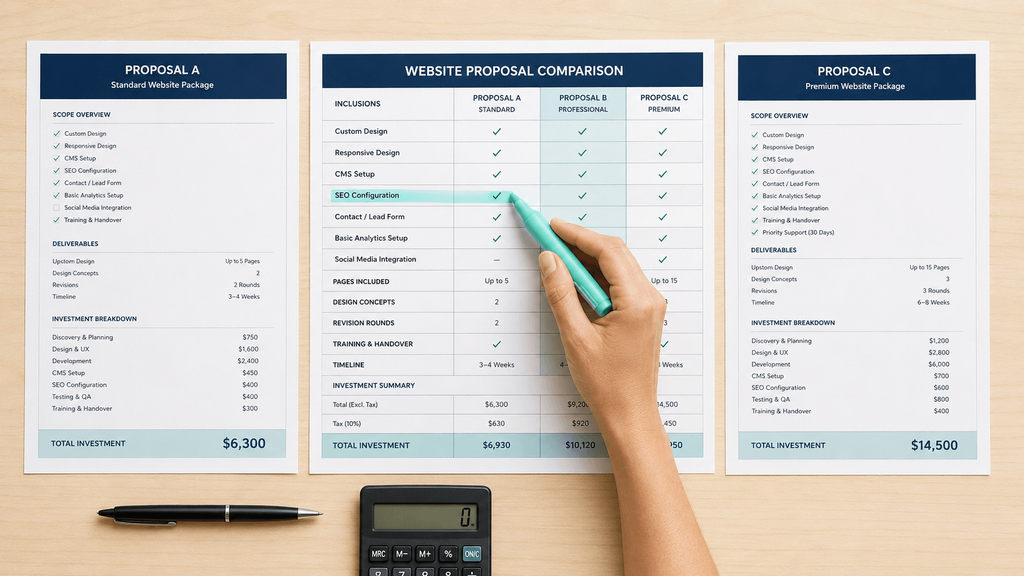
Do not compare agencies using project totals alone. A lower quotation may exclude essential services required before or after launch. Review the number of pages, revision rounds and included functions. Check whether content migration, SEO and training are covered.
Recurring expenses may include hosting, platform plans and premium applications. These costs should be separated from the website build. A professional Web design KL quotation should connect each cost with a clear deliverable. It should also identify all exclusions.
The contract must define payment milestones, cancellation terms and ownership. Additional work should require written approval before it begins. The business should retain suitable access to its domain, website platform and analytics accounts. Avoid unnecessary dependence on provider-controlled accounts.
Ask About Post-Launch Support
Website requirements continue changing after launch. Content, integrations and marketing campaigns may create future technical work.
Initial Support Period
Some agencies provide a limited troubleshooting period after launch. This support usually covers bugs connected with the original scope. Confirm the support period and reporting process. The agreement should distinguish genuine bugs from new requests.
Ongoing Maintenance
Ongoing plans may provide technical assistance, CMS support and content updates. Some packages also include performance monitoring.Ask how many monthly hours are included. Response times and additional charges should also be documented.
New pages and functions may require separate quotations. Maintenance should not be assumed to include unlimited development work.
Website Handover
The agency should transfer appropriate website and account access. Internal users may also require CMS training. Request documentation for integrations, licences and custom functions. This information makes future maintenance easier.
Watch for Common Warning Signs
Warning signs often appear during initial discussions. Pay attention to the agency’s communication and willingness to define its responsibilities. Be cautious when an agency:
- Cannot provide relevant live examples.
- Gives vague quotations.
- Promises unrealistic results.
- Offers an unusually short timeline.
- Communicates inconsistently.
- Avoids explaining its process.
- Provides unclear ownership terms.
- Excludes testing from the scope.
- Cannot describe post-launch support.
- Pressures you to sign immediately.
Price should not become the only deciding factor. An inexpensive website can become costly when essential services are excluded.
Choose a Web Design KL Agency With Confidence
The right agency should combine strategic thinking, design quality and technical capability. Its process must also suit your internal team. Review live work and ask how each project solved a business problem. Compare relevant experience instead of focusing only on visual style.
Request detailed proposals from shortlisted agencies. Compare deliverables, ownership, support and recurring costs alongside the total price. Local knowledge is valuable when supported by research and strong execution. Physical proximity alone should not determine your decision.
Review our portfolio and schedule a consultation to discuss your website goals. A clear project brief can help identify the right approach.